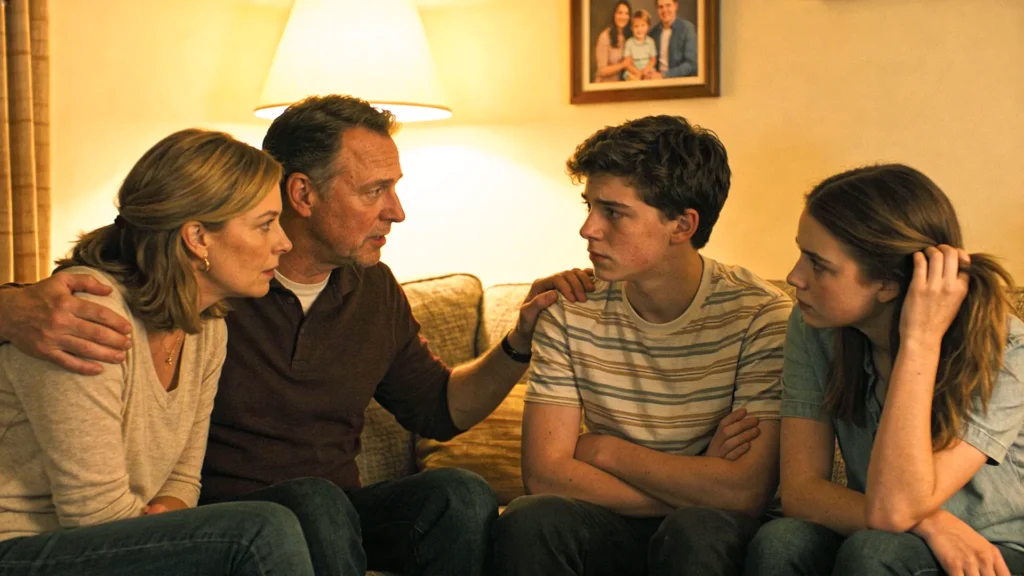
Guide for the Parents and Caregivers of 'Unscripted' Readers
Created with SeeDream 4.5

The struggles that Ben, Hannah, and Eddie face in Unscripted are real issues that many young people experience. If your teenager is confronted with similar challenges, you can find here solutions and resources for dealing with these issues.


How to support your teenager

Create opportunities for boys to practice healthy masculinity:

  • Encourage emotional literacy: name feelings, discuss them, validate them
  • Model vulnerability in your own life
  • Challenge gender stereotypes when you encounter them
  • Create father-son (or mentor-boy) rituals that don’t center on dominance or competition
  • Discuss consent explicitly and repeatedly
  • Monitor but don’t ban social media—teach critical consumption instead
  • Seek therapy early when you notice struggles


For sons specifically:

  • Tell them they’re loved for who they are, not what they achieve
  • Encourage diverse friendships including girls and gender-nonconforming peers
  • Discuss healthy relationships: what they look like, how they feel
  • Challenge “locker room talk” and misogynistic jokes
  • Show physical affection (hugs, hand on shoulder)
  • Attend to their mental health with same urgency as physical health
  • Model that asking for help is strength


For daughters specifically:

  • Teach that their worth isn’t determined by male attention
  • Discuss desire as normal and deserving of respect
  • Help them identify manipulation and coercion
  • Model setting boundaries and saying ‘no’
  • Validate their anger when they’re violated or dismissed
  • Show them women who choose themselves


For all teenagers:

  • Discuss digital literacy and surveillance
  • Practice consent in daily life (asking before hugging, respecting “no”)
  • Talk about how social media affects self-worth
  • Create screen-free spaces and times
  • Encourage activities that value process over product

The Role of Adult Men

Boys don’t develop healthy masculinity in a vacuum. They need models.


Dr. Hutton represents what positive male mentorship can look like:

  • Gentle but persistent challenge to toxic beliefs
  • Creation of safe space for vulnerability
  • Belief in boys’ capacity for growth
  • Modeling that seeking help is strength
  • Using questions rather than lectures


What Dr. Hutton does:

  • Helps Ben identify the origin of his body-shame (Grandma’s comments at age 13)
  • Challenges Eddie’s transactional view of relationships
  • Creates space for both boys to access emotions beyond anger
  • Never shames them for their struggles
  • Maintains appropriate boundaries while offering genuine care


What adult men in boys’ lives can do:

  • Talk about your own feelings and struggles
  • Model healthy relationships with partners
  • Challenge misogynistic jokes and comments when you hear them
  • Show physical affection with your sons (hugs, pats on shoulder)
  • Attend therapy yourself and discuss it openly
  • Admit when you’re wrong and apologize
  • Ask for help when you need it
  • Cry in front of your children, when appropriate
  • Talk explicitly about consent and respect


What NOT to do:

  • Tell boys to “man up” or “stop being a pussy”
  • Mock their emotional expression
  • Measure their worth by athletic ability or sexual conquest
  • Bond through degrading women
  • Treat therapy as shameful
  • Model that anger is the only acceptable male emotion
  • Remain silent when you witness toxic behavior


Age-Appropriate Adjustments

Ages 14-15:

  • Focus more on body image, friendship, peer pressure
  • Less explicit discussion of sexual content
  • Emphasize that sexual decisions can wait, but you’re open to discuss about this anytime


Ages 15-16:

  • They can handle full content including sexual themes
  • Initiate deeper analysis of ideology and systems
  • Ask and respond to personal application questions
  • They need space to challenge adult perspectives, even if this feels uncomfortable to you


Ages 18+:

  • Invite them to share personal experiences with content in book, if any
  • Engage them in discussions about the political/systemic dimensions
  • Offer support to distinguish between past behavior and current growth
  • Ask forward-looking questions about adult relationships but don’t press for immediate answers


General Mental Health Resources

Psychology Today Therapist Finder — Search by location, insurance, specialty, and identity. Many therapists offer sliding-scale fees to reduce costs. Website: www.psychologytoday.com/us/therapists

Hub of Hope UK — Put in your postcode and it lists all the mental health services in your local area, including those for young people (25 & under). Website: www.hubofhope.co.uk


• If you’re in the UK

Childline — Free, confidential support for anyone under 19. Phone: 0800 1111 Website: www.childline.org.uk

The Mix — Support for under-25s on any issue. Phone: 0808 808 4994. Website: www.themix.org.uk

Samaritans — 24/7 emotional support. Their website has a directory of organizations that specialize in different forms of distress, from abuse to sexual identity. Phone: 116 123. Website: www.samaritans.org


• For our International Readers

Befrienders Worldwide — International directory of emotional support services. Website: www.befrienders.org


Organizations that align with the novel’s themes

• US-Based Organizations:

A Call to Men – An organization that educates men and boys about healthy masculinity and works to prevent violence against women. Website: www.acalltomen.org

The Representation Project – Uses film and media to challenge gender stereotypes and promote equality. Website: www.therepproject.org

RAINN (Rape, Abuse & Incest National Network) – The largest anti-sexual violence organization in the US, offering support and resources for survivors. Website: www.rainn.org


• UK-Based Organizations:

The Good Lad Initiative – A charity that promotes healthy masculinity and challenges toxic narratives. They offer workshops and resources for schools and communities. Website: www.goodladinitiative.com

White Ribbon UK – A campaign to end male violence against women by engaging men and boys in the conversation. Website: www.whiteribbon.org.uk

Rape Crisis England & Wales – Provides support for survivors of sexual violence and offers educational resources on consent. Website: www.rapecrisis.org.uk


• International Organizations:

Promundo – A global leader in promoting gender equality and preventing violence by engaging men and boys. Website: www.promundoglobal.org

MenEngage Alliance – A global network of organizations working to engage men and boys in gender equality. Website: www.menengage.org


‘Unscripted’ is unflinching in its depiction of the harm done in teenagers’ lives by violation of intimacy, toxic masculinity, digital surveillance, body-shame. It offers you , as an adult, a direct and realistic perspective of what feels and thinks your teen, when they are living such experiences.

I strongly believe both young people and their parents deserve stories that acknowledge their reality rather than sanitizing it. My goal is to open your eyes and mind, and to inspire you to stay close to your adolescent, during this raw and difficult period.

I’ve watched, in my practice and in my life, people of all ages choose authenticity over performance. I’ve seen boys reclaim tenderness. I’ve seen girls claim desire. I’ve seen teenagers build identities beyond the scripts they’ve inherited.

The work is hard. The journey is messy. But on the other side of that work is the possibility of genuine connection, both with you as a trusted adult, and with the mates that can offer them genuine love, care, and joy.

That possibility is worth fighting for, don’t you think?


Morgan D. Grey, M.Sc.

Psychologist and Author